

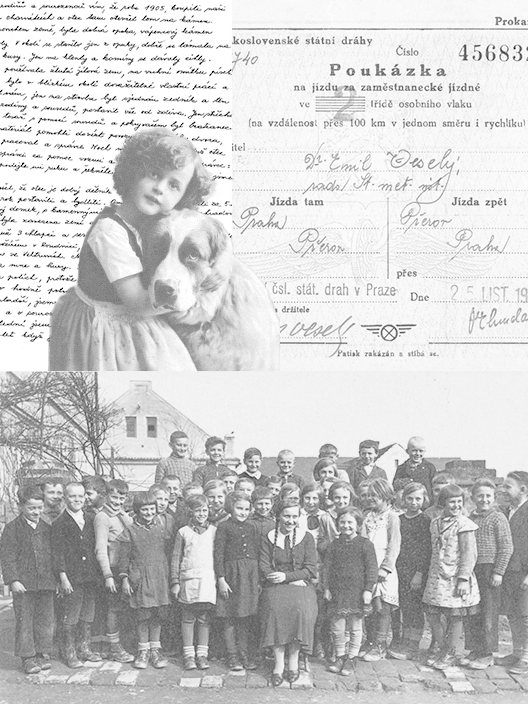
Center of History of Everyday Life
at the Faculty of Arts, University of Hradec Králové (FF UHK), is a lively research platform that focuses on history "from below" – on the experiences, memories, and everyday lives of ordinary people in modern and contemporary history. In an interdisciplinary dialogue, we combine historical research with memory studies, digital humanities, life writing, and citizen science. We draw on unique personal sources—diaries, memoirs, family chronicles, and autobiographical narratives—and strive to make individual experience a full-fledged part of historical knowledge. The center is also an open space for academic researchers, regional historians, students, and the general public to meet, and it emphasizes international cooperation, the popularization of science, and the sensitive mediation of a past that is human, multi-layered, and still alive.
Focus
CHEL focuses on developing inter-institutional discussion and cooperation within a given research area. The very connection between memory studies as an interdisciplinary field, Life Writing as a heuristically defined source base, civic science as a way of involving the lay public in research questions, and everyday history as a collection of one's own historical work necessitates discussion on a broad scale, both at the level of entire disciplines (history, sociology, ethnology, literary history, etc.) and within the framework of partial conceptual and methodological approaches (economic and social history, history of mentalities, historical anthropology, historical sociology, historical demography, and other disciplines). This connection also reflects the "eternal" factual tension between official historiography and individual memory recorded in texts written by non-historians, as both components of the presentation and construction of history are based on the narrativization of life experiences.
The aim of CHEL is to methodologically bridge this gap and develop its own concept of the relationship between official historiography on the one hand and individual and collective memory on the other, with regard to fundamental themes in Czech and foreign historiography, which still form the memory of the emancipatory rise of national identity or mental reconciliation with the past and officially promoted traditions and foreign historiography, which still form the memory of the emancipation of national identity and mental reconciliation with the past and officially promoted traditions. Here, the concept of historiography as the memory of a nation versus episodic-autobiographical recollection in the sense of a subjective approach to the past, or as an approach to the creation of collective and individual identity, is particularly relevant.
Similarly, the CHEL strives to find/facilitate/expand cooperation between the worlds of so-called "big" history, cultivated at academic institutions, and so-called "small" history, carried out by regional researchers. These research groups are two sides of the same coin, i.e., historical research. Both have their strengths and weaknesses. Academic historians can rely on easier access to modern research methods, as well as the results of foreign research. Through presentations at the international level, they can obtain valuable feedback from the wider research community. The possibilities for regional historians (or local historians) are much more limited in this respect. On the other hand, however, they have exceptionally valuable, detailed knowledge of a given locality/region, including contexts that are often only passed down orally (although these contexts must be carefully verified). Due to the nature of their focus, historians from academic institutions do not have access to this extent of knowledge. The aim of the CHEL is to use interdisciplinary cooperation between academic and regional history to balance the weaknesses of both approaches and, conversely, to reinforce their strengths through a synergistic effect.


Formal Anchoring
The CHEL is a department of the Faculty of Arts, University of Hradec Králové, established in accordance with the Statutes of the Faculty of Arts, University of Hradec Králové. The CHEL is not a separate legal entity; all legal acts are performed through the Faculty of Arts, University of Hradec Králové or the University of Hradec Králové. The CHEL is composed of internal members, external members, members of the Scientific Council, and collaborators. The appointment of internal members, external members, and collaborators of CHEL is carried out with the consent of the Dean of FF UHK. Board of Scientific Advisors of CHEL are appointed by the Dean of FF UHK. The activities of CHEL are continuously monitored by the Vice-Dean of FF UHK for Strategy and Development, the Vice-Dean of FF UHK for Science and Research, and the Dean of FF UHK. The activities of the CHEL are managed by its head, appointed by the Dean of the Faculty of Arts, University of Hradec Králové. The CHEL is financed from project resources. The head of the CHEL is responsible for its management in cooperation with the Vice-Dean for Strategy and Development of the Faculty of Arts, University of Hradec Králové.
The CHEL material heuristic base is a project of the History of Everyday Life Database (referred to as HELD) at the Historical Institute of the Czech Academy of Sciences (hereinafter referred to as HIU AV ČR). Cooperation and mutual relations between CHEL and HELD are governed by the Memorandum of Cooperation between University of Hradec Králové and HIU AV ČR.
Members of the Center
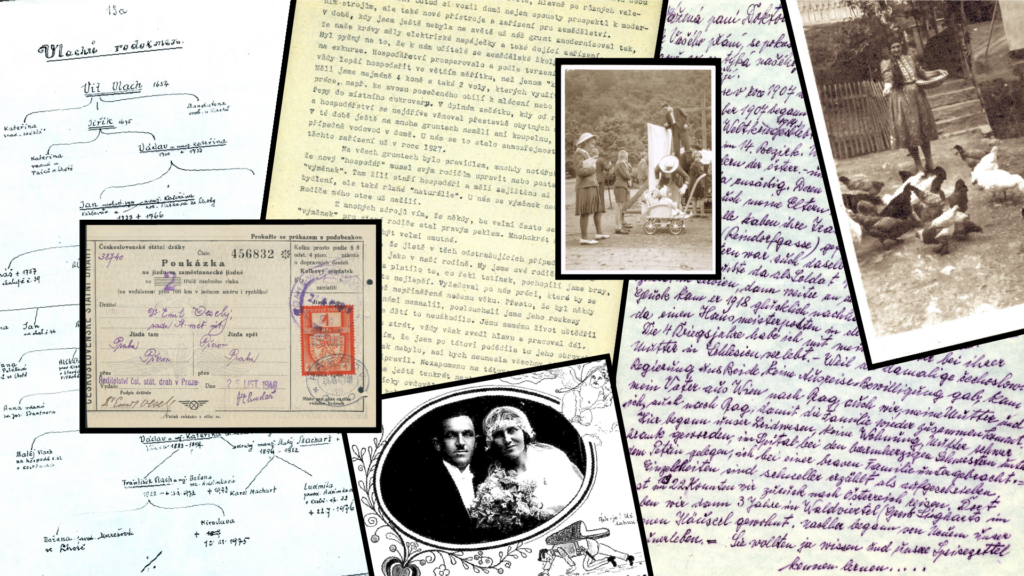
Internal Members
Internal members of the CHEL are employees of the Faculty of Arts, University of Hradec Králové, whose job description is explicitly or implicitly related to the activities of the CHEL. Internal members are responsible for the administrative operation of the CHEL and develop research, scientific, publishing, collection-building, popularization, educational, or other creative activities in the thematic and disciplinary focus of the CHEL. Internal members of the CHEL usually meet once a month. Internal members of the CHEL are approved by the dean of the Faculty of Arts of the University of Hradec Králové at the proposal of the head of the CHEL. The head of the CHEL who is appointed by the dean of the Faculty of Arts of the University of Hradec Králové, occupies a special place among the internal members. The head of the CHEL submits a report on the activities of the CHEL to the Board of Scientific Advisors of the CHEL at least once a year.
The current list of CDVD internal members is available HERE.
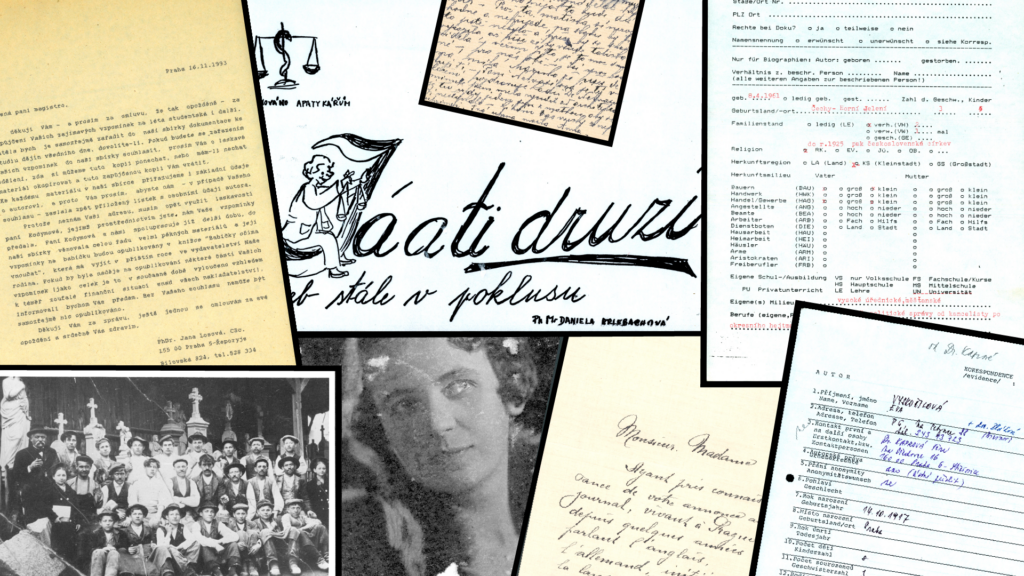
External Members
External members of CHEL are experts in the thematic focus of CHEL, not only from FF UHK, but also from scientific, research, educational, cultural, and scientific-popularization institutions in the fields of everyday history, the study of collective memory and identity, digital humanities, civic science, the phenomenon of Life Writing, and other fields. They may participate in meetings of internal members at their discretion and according to the needs of CHEL projects, grants, and activities. Their function is to discuss, advise, and cooperate. They are appointed by the head of CHEL on the recommendation of internal members and with the approval of the dean of FF UHK.
A special place among external members is held by the honorary chairman of the CDVD, Prof. PhDr. Milan Hlavačka, CSc.
The current list of external CHEL members is available HERE.
You can apply for external membership using the form:
Collaborators (Project Staff)
CHEL collaborators are employees whose involvement in CHEL work explicitly stems from their work within the framework of a CHEL project, grant, or activity. They are financed from external sources. They may also be internal or external members or members of the CHEL Board of Scientific Advisors.
They usually attend meetings according to the needs of individual projects, grants, or activities.
The current list of CHEL collaborators is available HERE.
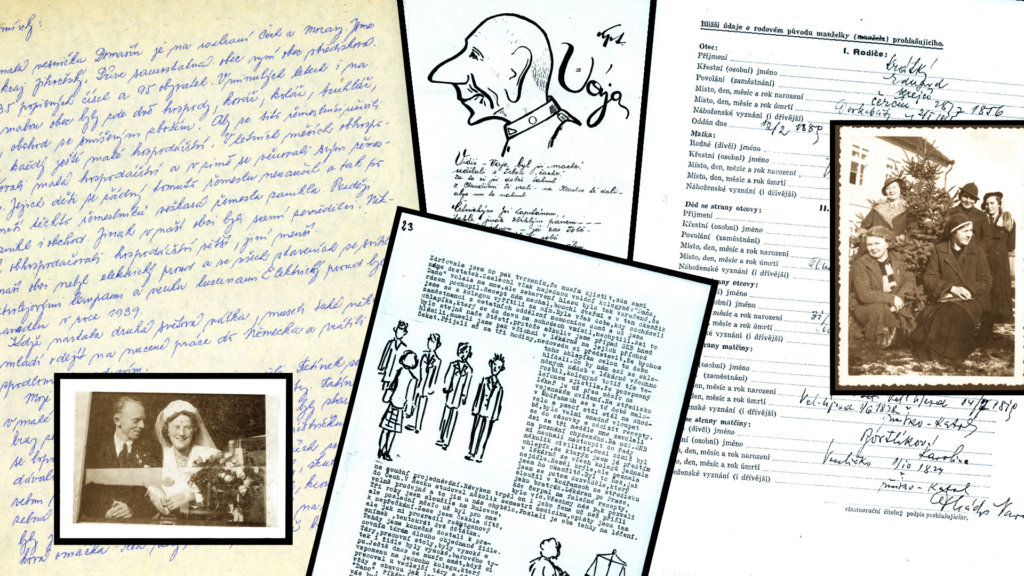
Board of Scientific Advisors
Dohlížecím a poradním orgánem CDVD je Vědecká rada. Úkolem Vědecké rady je reflektovat chod CDVD a současně podporovat vědeckou a odbornou spolupráci zúčastněných pracovníků (externích a interních členů, spolupracovníků), věnujících se problematice paměťových studií a nejrůznějším aspektům a přístupům k dějinám každodennosti vytyčeného chronologického a teritoriálního rámce v souladu s konceptuálním a metodologickým vymezením CDVD. Vědecká rada CDVD zajišťuje odbornou kontrolu činnosti CDVD a napomáhá udržovat vysoký standard výzkumné, publikační a popularizační činnosti, poskytuje zpětnou vazbu k výzkumným strategiím, edičním plánům, projektovým záměrům a metodologickým koncepcím.
The Board of Scientific Advisors meets at least twice a year via online meetings. Meetings of the CHEL Board of Scientific Advisors are convened and chaired by its chair, who is elected by the members of the CHEL Board of Scientific Advisors from among their ranks, or, in his/her absence, by a member of the CHEL Board of Scientific Advisors designated by him/her. The CHEL Board of Scientific Advisors adopts resolutions/opinions by a majority vote of the members present, with at least 2/5 of all its members present. In the event of a tie, the chair of the CHEL Board of Scientific Advisors meeting in question shall have the casting vote.
The CHEL Board of Scientific Advisors issues a statement on the CHEL activity report and subsequently submits this report, together with the adopted statement, to the Dean of the Faculty of Arts, University of Hradec Králové.
Minutes are taken of the proceedings of the CHEL Board of Scientific Advisors, which are verified by the chair of the meeting and at least two members present.
The members of the Board of Scientific Advisors are established researchers in fields related to the thematic focus of the CHEL, whose research has contributed to the profiling of everyday history, memory studies, the phenomenon of Life Writing, and digital humanities, and whose work is of fundamental importance to the field. The international dimension of the Board of Scientific Advisors guarantees mutual enrichment and confrontation of the specifically defined Czech perspective.
The CHEL Board of Scientific Advisors has 7–15 members appointed by the Dean of the Faculty of Arts, University of Hradec Králové, upon the recommendation of the Vice-Dean for Science and Research.
The current list of members of the CHEL Board of Scientific Advisors is available HERE.

Research Frameworks
The aim of CHEL is to create a platform for mutual discussion and a common space for research for researchers who, from an interdisciplinary perspective, focus on topics from the history of everyday life, memory studies, the phenomenon of Life Writing, civic science, and digital humanities. The field of research is chronologically defined by the period of modern and contemporary history, i.e., roughly from 1789 to 1990, with possible overlaps. The territorial definition then covers mainly Central Europe in a cultural-historical sense, not necessarily in a geographical sense.
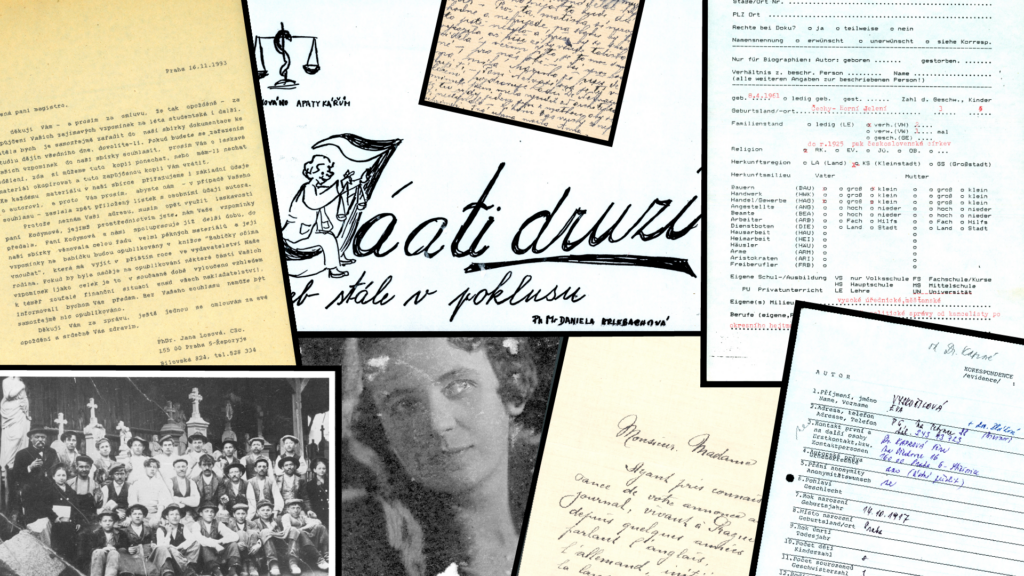
The research is inspired by the activities of sociologist Jana Losová, who established inter-institutional cooperation with Prof. Michael Mitterauer in the 1990s, thereby introducing the methods of Alltagsgeschichte to the Czech environment. This long-standing international collaboration has resulted in publications on the history of everyday life. Its contribution inspires the center's members to create inter-institutional and international scientific and research networks, on the basis of which it will be possible to publish research results.
First and foremost, the purpose of CHEL is to open up the broadest possible interdisciplinary discussion and thus connect the complex approaches of individual scientific disciplines. The goal is to strive for the most comprehensive understanding and processing of descriptions of life in the family and the wider environment, descriptions of things, activities, and everything we believe should not be forgotten, free from narrow disciplinary boundaries. All of this can become a source of learning, a source of yet undiscovered knowledge, a piece in the mosaic of the picture of "everyday" history, etc.
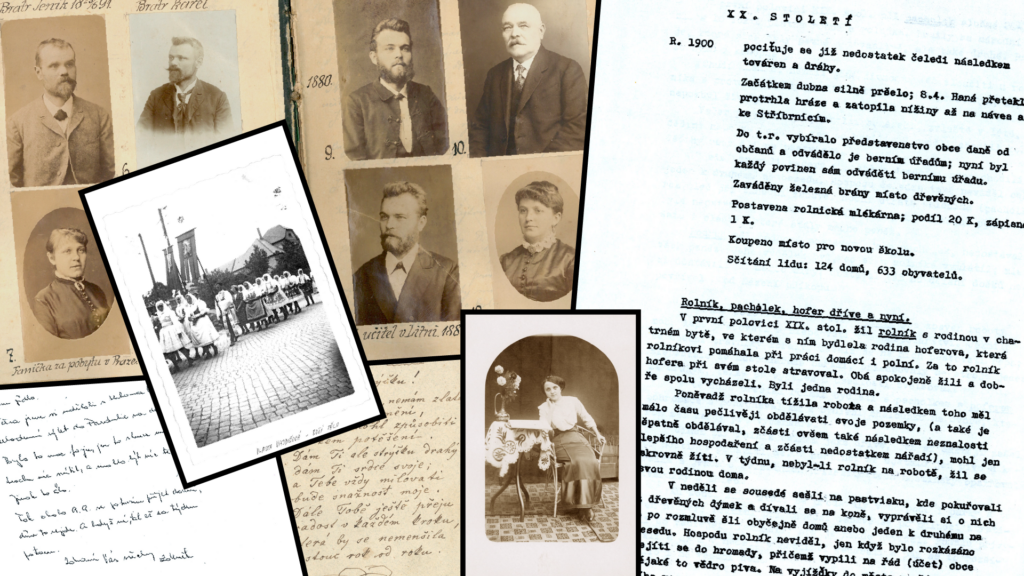
The primary source of support for CHEL is the digitized History of Everyday Life Database at the HIU AV ČR. This is a documentary collection of old memoirs, family chronicles, diaries, and other biographical recollections. This database contains more than eight hundred biographical records of various content, which are currently being digitized and prepared for cataloging. The collection is based on preserved old family memoirs and archived materials, but also includes a number of contributions that their authors have written only recently.
Methods and Concepts
The history of everyday life, or the history of ordinary days, is an integral part of "cultural history." The anthropological and culturalist shift, which rejected older sociological concepts that viewed culture as part of social "totality," enabled the establishment of new, reflective approaches based on quality. Their common denominator is the effort to rid themselves of the previous dominance of quantitative sociological statistics and return a "human face" to history. In addition to new approaches, new, previously neglected thematic fields have also opened up. Areas of human life that were either overlooked or directly tabooed have thus become the focus of researchers in various cultural contexts.
The second methodological and conceptual pillar on which CHEL stands is represented by specific modifications of historical memory studies. Alongside the so-called "memory boom," which represents various variations in the perception of human memory as a collective and identity-forming phenomenon, views that focus on memory as a private substance are similarly establishing themselves, albeit with less potential. In contrast to this trend, however, there are still opinions in professional discussions that question the role of historical memory research and relegate it far behind the supreme position reserved for academic and positivist history. These views are reserved about the fact that the result of their work should not be an "accurate" picture of the past, but rather its "reflection." The focus on memory research thus increases interest in the private sphere and, among other things, the demand for contemporary documents, memoirs, and recollections, the only "paradise from which man cannot be expelled." And while the history of everyday life saturates analytical tools and ways of looking at things, memory studies guarantee the production of suitable sources.
These approaches are related to the anthropological turn in the humanities and, more generally, to an "interest in people." History thus becomes something personal, intimate, and thoroughly human, rather than a "difficult-to-grasp science." On the other hand, even the "mere" processing of sources of a personal nature requires sophisticated research approaches, and is therefore nothing less than honest scientific work.
The anthropological shift is also linked to the development of citizen science, which has been on the rise over the last decade. The principle of this new field is to involve the lay public in addressing research questions. This participation, in which the public contributes to research to varying degrees, not only helps to answer research questions, but also promotes understanding and awareness of the activities of scientific and research institutions and professional workplaces in general.

Interdisciplinarity
The interdisciplinarity postulated above is fundamental and defining for CHEL. Without an interdisciplinary perspective and without the mutual enrichment of approaches, methods, goals, topics, and especially research results, there would be no justification for content-defined cooperation in the fields of everyday history, memory studies, civic science, life writing, digital humanities, biographical studies, the phenomenon of public history, agency roles, etc. Few historiographical disciplines have recently experienced such a rise in the international research field and such productive dialogue between the humanities and natural sciences as memory studies. This cooperation has certainly been aided by the common subject of research, which is historical memory. At the same time, no other discipline has contributed so fundamentally to the practical political use of memory studies as a place of memory (see the extensive scientific output of this field as one of the consequences of Franco-German rapprochement within the EU). In this area of activity, the CHEL will therefore focus primarily on organizing conferences with international participation, public lectures, presentations and popularization, as well as colloquiums and discussion meetings, or exhibition projects (e.g., Czechia-Bavarian places of memory).
The CHEL will first establish an international network in Central Europe, primarily in cooperation with the University of Vienna (in particular with its affiliated organization, Dokumentation der lebensgeschichtlichen Aufzeichnungen). Subsequently, the CHEL will join European research structures in the field of memory studies, primarily the recently established memory Studies Association.
Sources
A specific feature of the research conducted by the above-mentioned researchers participating in the CHEL is the extensive use of sources of a personal nature in the broad sense of the word, i.e., not necessarily only ego-documents. These are sources that contain self-perception and presentation of historical events, people, and phenomena in general, thus presenting a certain image of the perception of the environment, but also of oneself within the family, society, country, or social class. They contain information that reflects the author(s)' relationship to the hierarchy of rank and shows its changes over time, as well as revealing knowledge and life experiences. Ultimately, ego-documents justify, explain, excuse, and convince us of the meaning of individual and human actions.
A glance at the German-language book market clearly shows the popularity of publications based on the above-mentioned concepts. Autobiographical accounts by workers, maids, farmers, lumberjacks, cottagers' children, and others have fascinated not only social and cultural scientists for several years, but also dominate the book markets in cinemas and on television (pop culture) as popular and widely read documents. In this context, it can be argued that contemporary postmodern human, aware of the relativity of his place in society and history, seems to have been searching in the past for someone similar to himself.
As indicated above, one of the basic heuristic dimensions will be the digitized Database of Everyday History (or others, such as the Memory of Nations Database, etc.). The analysis and interpretation of narrated life stories represents one of the few approaches to understanding at least some of the processes of reconstructing the past.
